
How to Convert Embroidery File for Brother Embroidery Machine Easily
Introduction
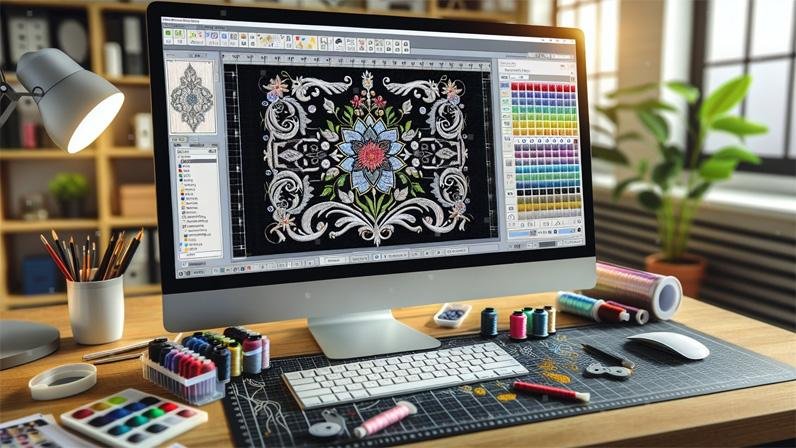
You have a beautiful embroidery design ready to stitch, but your Brother machine stares back with an error message: "File Not Supported" or "Format de fichier imprévu." This frustrating moment is practically a rite of passage for every Brother embroiderer. The good news is that the solution is almost always simpler than you think. Your Brother machine speaks a specific language—primarily PES—and when you feed it a file in any other dialect, it simply cannot understand the instructions. Learning how to Convert Embroidery File for Brother Embroidery Machine is not about complicated engineering; it's about knowing which tools to use and which simple steps to follow. This guide will walk you through the easiest, most reliable methods to get any embroidery design working on your Brother machine, from free software options to Brother's own official apps.
Step 1: Know Your Brother Machine's Language
Before you convert anything, you must know what format your specific Brother model needs. This is the most common source of confusion—and the easiest to fix.
The Gold Standard: PES. Almost all Brother embroidery machines read .PES files natively . This format stores stitch data, color order, and design information that Brother machines understand perfectly. If you can get your design into PES format, you are 99% of the way there.
The Exceptions: Some older Brother models like the Ultima 2002 also read .PHC files, and many modern machines (NQ3700D, PR680W) can read .DST files as well . However, DST files do not contain color information, so you will need to manually assign thread colors on the machine .
Quick Reference:
-
Most Brother home machines → .PES
-
Older Ultima series → .PES, .PHC, .DST
-
Modern PR/NQ series → .PES, .DST
Your First Action: Check your machine's manual or look up your model online. Write down its native format. This eliminates guesswork.
Step 2: The Easiest Method – Use Brother's Free Artspira App
If you own a wireless-enabled Brother embroidery machine (2020 models or newer), this is the simplest method in 2026. Brother's Artspira app is completely free to download and includes powerful conversion features .
What Artspira Does:
-
Converts standard images (JPEG, PNG) to PES embroidery files
-
Imports external embroidery files (PES, PHC, PHX, DST) for editing
-
Allows wireless transfer directly to your machine
-
Includes 2,000+ free designs and 300+ fonts
How to Use It:
-
Download Brother Artspira from the App Store or Google Play (free)
-
Open the app and select "Convert images to embroidery"
-
Upload your image or design file
-
Adjust settings (size, stitch type, colors)
-
Save as PES and transfer wirelessly to your machine
Note: The image-to-embroidery conversion requires an Artspira+ subscription after your free trial ends . However, importing and converting existing embroidery files (DST to PES, etc.) is included in the free version.
This is by far the easiest workflow for casual users. No computer, no cables, no complex software.
Step 3: The Free Desktop Method – Ink/Stitch + Inkscape
If you prefer desktop software or need to convert files without a subscription, Ink/Stitch is your best friend. It is completely free, open-source, and runs on Windows, Mac, and Linux .
What You Need:
-
Inkscape (free vector graphics software)
-
Ink/Stitch extension (free, installs into Inkscape)
How to Convert Any Embroidery File to PES:
-
Install Inkscape and Ink/Stitch – Both are free and well-documented online.
-
Open Inkscape and go to File > Import.
-
Import your source file – Ink/Stitch supports over 25 embroidery formats, including DST, EXP, JEF, VP3, and many others .
-
Preview the stitches – Use the Ink/Stitch simulation window to verify the design looks correct.
-
Export as PES – Go to File > Save As and select .PES from the format dropdown.
Pro Tip: Ink/Stitch does not have a one-click "auto-digitize" button for images. If you are converting a JPG or PNG, you must first trace it into vector paths using Inkscape's Trace Bitmap function, then assign stitch types manually . This requires some practice, but it gives you total control over stitch quality.
Why This Method Wins: It costs nothing, works on any computer, and preserves stitch integrity better than most online converters .
Step 4: The Paid-but-Powerful Method – Dedicated Conversion Software
If you convert files regularly, investing in software saves hours of frustration. These tools handle batch conversions, complex edits, and produce professional-grade files.
Top Recommendations for Brother Users:
| Software | Best For | Key Feature |
|---|---|---|
| Brother PE-Design | Serious Brother users | Native PES creation, official Brother support |
| Embrilliance Essentials | Hobbyists & small business | 40+ formats, batch processing, intuitive interface |
| Hatch Embroidery | Beginners to advanced | Auto-digitizing, excellent stitch control |
| Wilcom TrueSizer | Professionals | 100+ formats, free viewer available |
Brother PE-Design is the official software and integrates seamlessly with your machine. Embrilliance is widely considered the most user-friendly option for converting files without learning full digitizing .
The 30-Day Trial Trick: Most paid programs offer full-featured free trials. Download Hatch or Embrilliance, convert all your files during the trial period, and cancel before billing. This is perfectly legal and very effective for one-time projects.
Step 5: Fixing the "File Not Supported" Error Immediately
Sometimes you have the correct format, but your Brother machine still refuses the file. This happens for several specific reasons, and each has a simple fix .
1. Check the File Extension (Don't Trust the Name)
Windows sometimes hides file extensions. A file named "logo.pes" might actually be "logo.pes.dst" or "logo.pes.jpg". Enable file extensions in Windows Explorer and verify the actual suffix is .PES.
2. Unzip Compressed Files
Brother machines cannot read ZIP, RAR, or 7Z files. You must extract the .PES file first and transfer the extracted file alone .
3. Simplify the File Name
Brother machines often choke on:
-
Special characters (!@#$%^&*)
-
Spaces
-
Long names (over 8-10 characters)
-
Non-English letters
Fix: Rename your file to something simple like logo.pes or flower1.pes using only letters, numbers, and underscores .
4. Format Your USB Drive Correctly
This is the most overlooked fix. Brother machines require FAT32 formatting. USB drives formatted as exFAT or NTFS will not work .
How to Fix:
-
Insert USB drive into your computer
-
Right-click the drive, select Format
-
Choose FAT32 from the file system dropdown
-
Click Start
5. Check the Stitch Count Limit
Older Brother models like the Ultra 2001/2003D cannot read designs exceeding 120,000 stitches . If your design is massive, you must split it into multiple files using embroidery software.
6. Place Files in the Correct Location
Some Brother machines require files to be in the root directory (not inside folders). If your machine isn't showing the file, move it out of any subfolders and onto the main USB directory .
Step 6: The Professional's Secret – Import Instead of Open
Here is a trick many Brother users don't know. In Brother's PE-Design software (and many others), there is a critical difference between Open and Import .
-
Open: Only works for native .PES or .PHC files that are not corrupted.
-
Import: Works for other manufacturer formats (.DST, .EXP, .JEF, .VIP, .SEW, .CSD, .XXX, and more).
If a file won't open, try importing it. This simple switch solves "unrecognized format" errors instantly .
What NOT to Do (Seriously, Avoid These)
1. Do Not Use Random Online Converters
Sites that claim "Instant PNG to PES" with no software download almost always produce garbage. They generate low-quality stitch files that cause thread breaks, puckering, and misalignment . You also risk uploading your proprietary designs to unknown servers.
2. Do Not Rename the File Extension
Changing logo.dst to logo.pes does absolutely nothing. The machine still reads the internal file structure, which remains DST. You need actual conversion software.
3. Do Not Skip the Test Stitch
Always stitch your converted file on scrap fabric before your final garment. The screen preview lies; fabric tells the truth .
Troubleshooting Quick Reference
| Problem | Most Likely Fix |
|---|---|
| "File Not Supported" | Wrong format → Convert to PES |
| File doesn't appear on machine | USB not FAT32 → Reformat |
| File shows but won't stitch | Corrupted or too many stitches → Re-convert or split |
| Colors are wrong | DST file has no color data → Manually set colors on machine |
| Design looks distorted | No pull compensation → Redigitize or use better software |
| Machine says "Pattern limit" | Too many files on USB → Delete unused files |
Conclusion: You Don't Need to Be a Digitizing Expert
Converting embroidery files for your Brother machine is not about becoming a professional digitizer. It is about knowing the right tool for the right job and following a few simple rules.
The easiest path: Use Brother's free Artspira app if you have a wireless machine. Import your DST or other format file, convert to PES, and transfer wirelessly. Done.
The free desktop path: Download Inkscape + Ink/Stitch. Import your file, preview, export as PES. It takes a little practice but costs nothing and works forever.
The "I need it perfect" path: Invest in Embrilliance Essentials or Hatch Embroidery. Use the free trial first. Convert with confidence.
The troubleshooting path: When your machine rejects a file, check the four most common culprits: USB formatting, file name, unzipped status, and stitch count.
The bottom line is simple: your Brother machine wants to sew beautifully. It is not being difficult on purpose. Give it a clean, properly converted PES file, and it will reward you with thousands of perfect stitches. Skip the shady online converters, respect the FAT32 rule, and always—always—test on scrap fabric first. You will wonder why you ever thought this was hard.

 English
 French
 Spanish
 Portuguese
 Deutsch
 Turkish
 Dutch
Dutch
 Italiano
 Russian
 Romaian
 Portuguese (Brazil)
 Greek
Greek